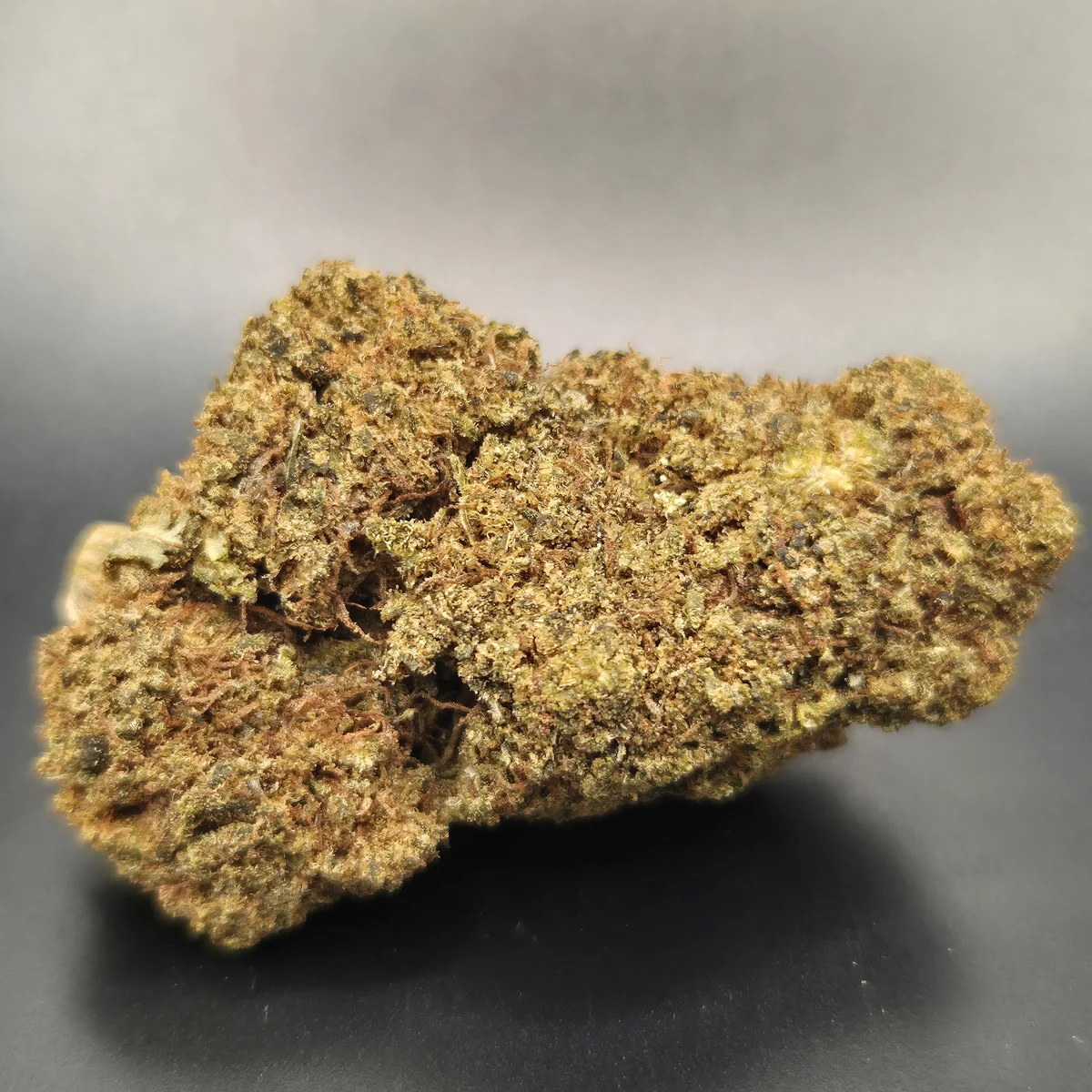
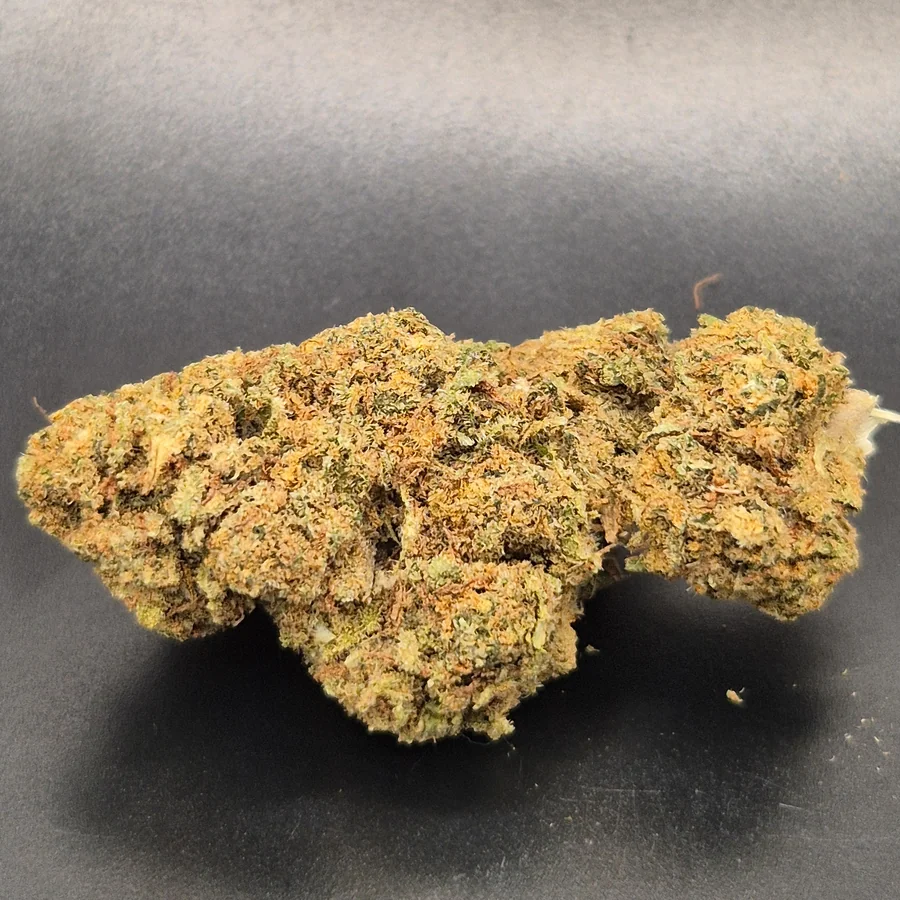
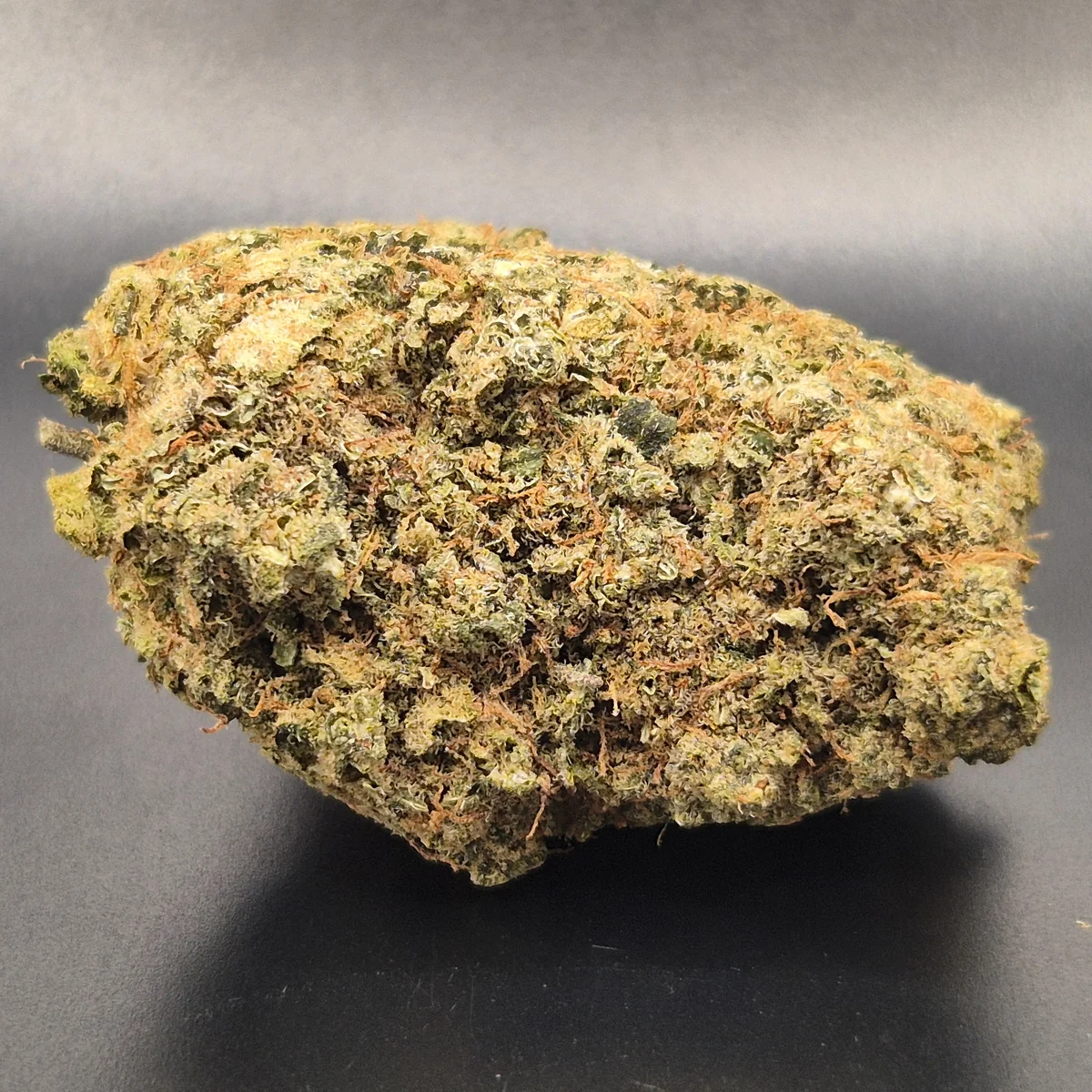
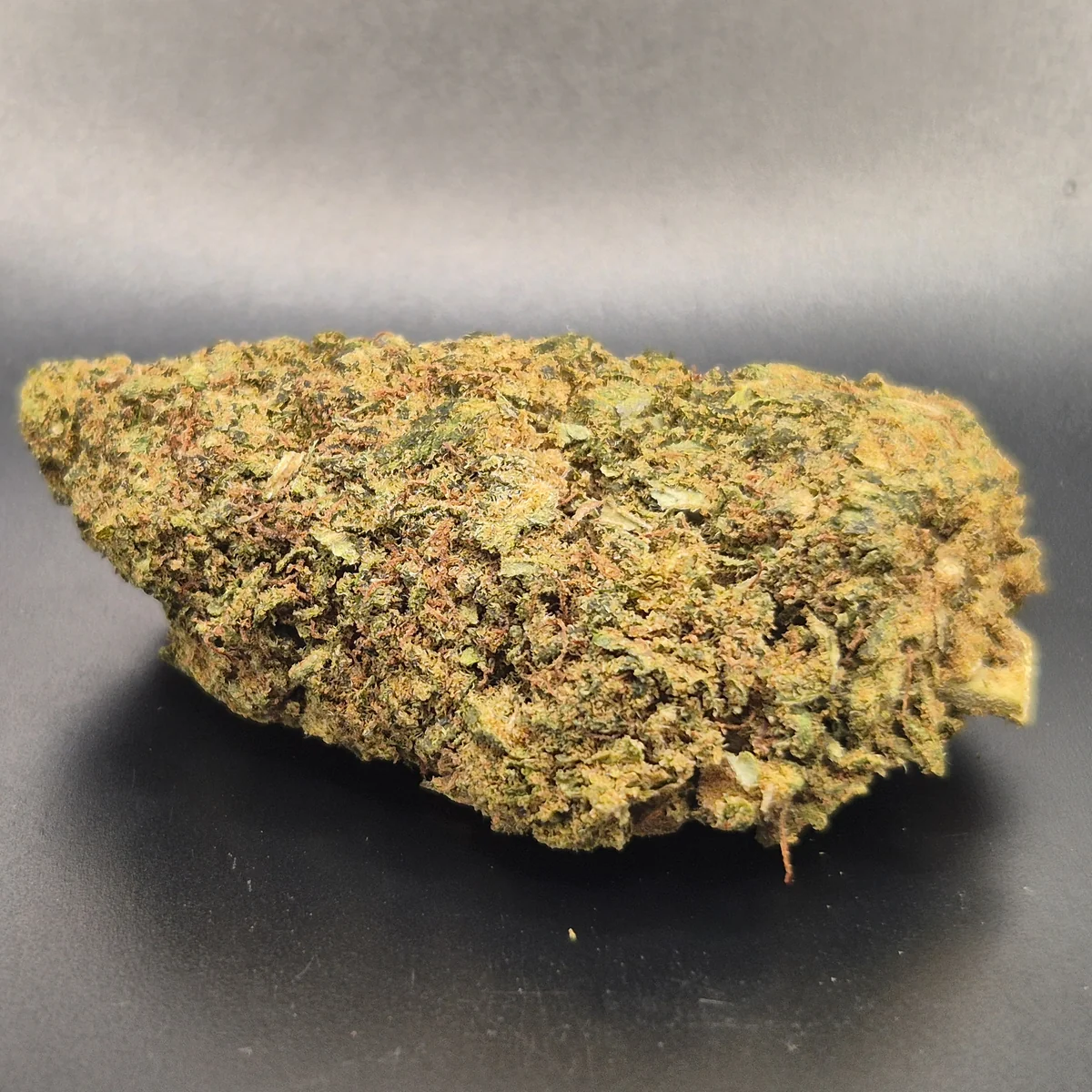
For each molecule: molecular formula, class, boiling point, aroma, plants that contain it in nature, chemical quirks and the cultivar profiles where it is often reported. Those profiles are trends from the literature and testing databases, never a promise: only a lab profile of a specific batch settles the question.
Myrcene (β-myrcene)
C10H16 · Acyclic monoterpene · b.p. 166-168 °C
Aroma: earthy and musky, with ripe-fruit roundness and a balsamic, peppery edge.
Found in nature: hops, lemongrass, mango, cardamom, bay leaf, juniper berry, verbena and wild thyme.
Chemistry: open chain with three double bonds. Unstable in air and prone to polymerisation, it is also one of the first terpenes to drop during drying. Industry uses it as an intermediate for other aroma chemicals.
Typical profiles: the leading monoterpene in a large share of flowers and in hemp generally; prominent in Kush-type, Skunk-type and many earthy hybrids.
Limonene
C10H16 · Monocyclic monoterpene · b.p. 176 °C
Aroma: lemon and orange zest for the (+) enantiomer; a piney, turpentine-like note for the (−) form.
Found in nature: the main component of citrus peel oils; the (−) form turns up in caraway, dill and bergamot orange.
Chemistry: one ring, two double bonds, chiral. In moist air it oxidises into carveol, carvone and limonene oxide, which changes the scent of poorly stored material.
Typical profiles: often secondary, sometimes dominant; defines citrus profiles and the widespread caryophyllene-limonene chemical group seen in modern hybrids.
β-Caryophyllene
C15H24 · Bicyclic sesquiterpene · b.p. 262-264 °C
Aroma: black pepper, clove and dry wood with spicy warmth.
Found in nature: black pepper, clove buds, oregano, hops, basil, cinnamon, rosemary and lavender.
Chemistry: a structure rarely seen in nature: a four-membered cyclobutane ring and a trans double bond inside a nine-membered ring. It oxidises to caryophyllene oxide and occurs alongside its isomer humulene.
Typical profiles: the main sesquiterpene in most flowers; frequently reported in the spicy profiles of the Cookies, OG and Gorilla families.
α-Pinene
C10H16 · Bicyclic monoterpene · b.p. 155-156 °C
Aroma: freshly crushed pine needles, conifer resin, dry green notes.
Found in nature: conifers, turpentine (where it is the main component), rosemary, sage, basil and eucalyptus; it is the most widely encountered terpenoid in nature.
Chemistry: double bond inside a strained bicyclic system of four- and six-membered rings; Finola hemp makes mostly the (+) form.
Typical profiles: a common supporting terpene; linked to the myrcene-pinene chemical group and to fresh, foresty cultivars such as Jack Herer or Blue Dream.
β-Pinene
C10H16 · Bicyclic monoterpene · b.p. 166 °C
Aroma: woodier and more herbal than its isomer, with hints of basil and hops.
Found in nature: makrut lime peel (where it is a main component), dill, parsley, hops and conifers.
Chemistry: same skeleton as α-pinene but with an exocyclic double bond (a methylene group); slightly less volatile.
Typical profiles: nearly always present next to α-pinene, in smaller amounts.
Linalool
C10H18O · Acyclic monoterpene alcohol · b.p. 198-199 °C
Aroma: floral, fresh lavender for the (R) form, sweeter and more petitgrain-like for the (S) form.
Found in nature: made by more than 200 plant species: lavender, bay laurel, basil, coriander, orange blossom, birch and hops.
Chemistry: chiral tertiary alcohol with a very low odour threshold (0.8 ppb for the R form). It oxidises in air, so airtight storage matters.
Typical profiles: rarely dominant but easy to notice thanks to its low threshold; found in floral profiles and some Kush lines.
Terpinolene
C10H16 · Monocyclic monoterpene · b.p. 185-186 °C
Aroma: layered and fresh: pine, flowers, a twist of citrus and a slightly herbal sweetness.
Found in nature: lilac, some conifers, apples, cumin, nutmeg and tea tree, usually in small amounts.
Chemistry: an isomer of limonene with an exocyclic double bond; no dedicated synthase was found in Finola, a sign of how intricate its biosynthesis is.
Typical profiles: defines the rarest chemical group (terpinolene-myrcene); typical of Hazes, Jack Herer, Durban Poison and Trainwreck.
α-Humulene
C15H24 · Monocyclic sesquiterpene · b.p. 106-107 °C at 5 mmHg
Aroma: hoppy, woody, herbal and dry.
Found in nature: hops (up to 40% of cone oil depending on variety), sage, spearmint, ginger, pine trees and ginseng.
Chemistry: an eleven-membered ring with three double bonds; an isomer of β-caryophyllene once called α-caryophyllene.
Typical profiles: almost always follows caryophyllene, at about 1 part to 2.5 in Finola; common in earthy and spicy profiles.
β-Ocimene
C10H16 · Acyclic monoterpene · b.p. 100 °C at 70 mmHg
Aroma: sweet and herbal with a fruity, lightly woody note.
Found in nature: basil (the genus Ocimum gave it its name), bay rum tree leaves, hops, mango and orchids.
Chemistry: open chain with three double bonds, in cis (Z) and trans (E) forms; unstable in air like myrcene. Finola enzyme CsTPS6 makes 97% (E)-β-ocimene.
Typical profiles: a common secondary compound in fresh, fruity profiles, especially within the terpinolene group.
α-Bisabolol
C15H26O · Monocyclic sesquiterpene alcohol · b.p. 153 °C at 12 mmHg
Aroma: gentle and floral, with hints of apple, honey and coconut.
Found in nature: the main constituent of German chamomile oil (Matricaria recutita); also present in candeia wood.
Chemistry: tertiary alcohol, a colourless viscous oil with very low volatility (153 °C at 12 mmHg).
Typical profiles: a minor terpene, reported at notable levels in some selected cultivars.
Nerolidol
C15H26O · Acyclic sesquiterpene alcohol · b.p. 112-114 °C at 1 mbar
Aroma: woody and floral, reminiscent of fresh bark and orange blossom.
Found in nature: neroli, ginger, jasmine, lavender, tea tree and lemongrass.
Chemistry: open-chain tertiary alcohol with cis and trans isomers; very low volatility.
Typical profiles: usually a trace compound, yet it can rank among the top five terpenes in some flower extracts.
Geraniol
C10H18O · Acyclic monoterpene alcohol · b.p. 230 °C
Aroma: rose and geranium with a citrus, citronella lift.
Found in nature: a major component of palmarosa, rose and citronella oils; honeybees secrete it to mark nectar-rich flowers.
Chemistry: open-chain primary alcohol (E isomer); its Z isomer is nerol. High boiling point (230 °C).
Typical profiles: minor, rounding off floral and fruity profiles.
Eucalyptol (1,8-cineole)
C10H18O · Bicyclic monoterpene ether · b.p. 176 °C
Aroma: fresh, minty and camphoraceous, very clean.
Found in nature: eucalyptus, bay leaf, rosemary, sage, cardamom and mugwort.
Chemistry: a cyclic ether whose oxygen bridges two ring carbons. With no double bond it resists oxidation better than hydrocarbon terpenes.
Typical profiles: present in small amounts; adds minty freshness to some profiles.
Valencene
C15H24 · Bicyclic sesquiterpene · b.p. 123 °C at 11 mmHg
Aroma: sweet orange, ripe citrus, slightly woody.
Found in nature: citrus fruit, above all the Valencia orange it is named after.
Chemistry: eremophilane skeleton; it is the precursor of nootkatone, the key molecule in grapefruit scent.
Typical profiles: minor; reinforces the citrus register of orange- and tangerine-named cultivars.
Camphene
C10H16 · Bicyclic monoterpene · b.p. 159 °C · m.p. 51-52 °C
Aroma: fir needles, camphor, woody and herbal.
Found in nature: turpentine, cypress, camphor tree, citronella, neroli, ginger, valerian and mango.
Chemistry: a white solid at room temperature (melting at about 51 °C), with an exocyclic double bond on a norbornane-type skeleton.
Typical profiles: minor; travels with the pinenes in forest-style profiles.
α-Terpineol
C10H18O · Monocyclic monoterpene alcohol · b.p. 218 °C
Aroma: lilac and floral over a pine and citrus base.
Found in nature: pine oil, cardamom, cajeput and petitgrain.
Chemistry: the most common of the four terpineol isomers; a fairly stable tertiary alcohol.
Typical profiles: minor; often found next to pinene and linalool.
Guaiol
C15H26O · Bicyclic sesquiterpene alcohol · m.p. 92 °C
Aroma: woody with touches of pine and rose.
Found in nature: guaiacum wood oil and Australian cypress pine (Callitris).
Chemistry: a guaiane-type alcohol, crystalline at room temperature (melting at about 92 °C).
Typical profiles: minor but regularly detected; adds woody depth.
α-Phellandrene
C10H16 · Monocyclic monoterpene · b.p. 171-172 °C
Aroma: peppery and minty with a light citrus edge.
Found in nature: eucalyptus (Eucalyptus dives), dill and water fennel; the β form comes mostly from turpentine.
Chemistry: both double bonds sit inside the ring in the α form; the β form has one outside it. α-Phellandrene can form peroxides when heated in air.
Typical profiles: minor; β-phellandrene is among the side products of a hemp pinene synthase.
Sabinene
C10H16 · Bicyclic monoterpene · b.p. 163-164 °C
Aroma: peppery, woody, spicy and fresh.
Found in nature: carrot seed oil (a major component), black pepper, nutmeg, marjoram, holm oak and Norway spruce.
Chemistry: a three-membered ring fused to a five-membered ring (thujane skeleton), a strained system; exists as (+) and (−) forms.
Typical profiles: minor; part of the peppery touch in some spicy profiles.
Farnesene
C15H24 · Acyclic sesquiterpene
Aroma: green apple, green and floral.
Found in nature: apple skin coating (α form) and gardenia flowers; (E)-β-farnesene is the alarm signal released by aphids.
Chemistry: six isomers; an open chain with four double bonds, so it oxidises readily.
Typical profiles: a regular secondary sesquiterpene next to caryophyllene and humulene.
δ-3-Carene
C10H16 · Bicyclic monoterpene · b.p. 170-172 °C
Aroma: sweet and pungent, fir needles and damp woodland.
Found in nature: turpentine (up to 42% depending on origin), mango, cedar, rosemary and bell pepper.
Chemistry: a six-membered ring fused to a three-membered ring; chiral.
Typical profiles: minor; strengthens the resinous register.
Borneol
C10H18O · Bicyclic monoterpene alcohol · b.p. 213 °C · m.p. 208 °C
Aroma: camphoraceous, pungent, woody.
Found in nature: rosemary, mugwort, Dryobalanops aromatica, Blumea balsamifera, camphor tree and galangal.
Chemistry: solid (melting at about 208 °C) with the hydroxyl group in the endo position. Plants oxidise it to camphor; its exo isomer is isoborneol.
Typical profiles: minor; found in herbal, camphor-like profiles.
Phytol
C20H40O · Acyclic diterpene alcohol · b.p. 203-204 °C at 10 mmHg
Aroma: cut grass, hay, green notes.
Found in nature: anywhere chlorophyll is found, since it forms its side chain; it dominates the aroma of some green teas.
Chemistry: a 20-carbon diterpene released when chlorophyll breaks down; probably the most abundant acyclic isoprenoid in the biosphere.
Typical profiles: mainly in whole-plant extracts; much quieter in sieved resins.
Fenchol
C10H18O · Bicyclic monoterpene alcohol · b.p. 201 °C · m.p. 39-45 °C
Aroma: basil-like, fresh, lemony and slightly camphoraceous.
Found in nature: basil, to which it gives its typical scent; up to 15.9% of the volatile oil of some aster species.
Chemistry: an isomer of borneol, colourless solid (melting at 39 to 45 °C); oxidation gives fenchone.
Typical profiles: regularly reported among the secondary terpenes of cannabis.
Caryophyllene oxide
C15H24O · Sesquiterpene epoxide
Aroma: dry wood and spice, duller than caryophyllene.
Found in nature: clove, pepper and basil oils, especially after exposure to air.
Chemistry: forms when one double bond of β-caryophyllene becomes an epoxide: a chemical marker of oxidation.
Typical profiles: its share grows with age and air exposure, which makes it a useful storage indicator.